Wednesday, March 31, 2010

Brownie Badge Placement Cookie Sales

School construction

With the Law 23/96, which provides for a modernization of classrooms, the Ministry of Education has allocated three-year plan 96/98 King f the regions 1.569 billion, of which 456 in '96, 522 in 591 in '97 and '98. The precedence of these funds is reserved for the completion of work already under way, to situations of increased need for classrooms and adaptation of buildings to safety standards set by Decree Law 626/94, Law 46/90 on electrical and '92 Decree on the prevention of fires. But the bureaucratic path that these funds must follow before being committed is very long (can take up to 15 months), and this explains why the fruits of the first two tranches (96/97) are only now beginning to be seen. The parameters used by the Ministry for the allocation of funds have particularly in view of the crowding of the structures, the precariousness of plants and buildings. It was also considered the geographical location, the presence of sports facilities, or buildings subject to historic and artistic constraints. In addition to the newly allocated funds for the future, others will be allocated 385 billion. The law 448/98 authorizing the expenditure of 30 billion per year since 2000.

we said

Enter the world of school tragedy equivalent at least to take a heavy incazzatura, but someone has to do it ... Currently in Italy there are 12,945 schools. Over the past three years the Ministry of Education has allocated 1.569 billion, which means that for every school the state has granted the sum of 120 million lire in three years, or approximately 40 million per year. But congratulations! If we go on like this we risk transforming schools into real simple Regge! And then we are told that we need to fund private schools (for which in three years is allocated more funds for the public: 1.569 billion for the public compared with 1891 for the privately) because so much money to invest in public education we have enough ... Any of the information to better understand the situation: 20% of Italian schools have poor sanitary facility, 13% of the water system, electrical system, 19%, 11% of the sewer system, and on 14 % the heating, 16% of the roof, the plaster i1 23%, 8% the stairs etc. Again, the 18.77% of the existing school buildings has been adapted to school and not intended to be school only 34% of the buildings has a certificate of accident prevention, while only 56% have a certificate of sanitation; Best of all is (brace yourselves!) only 20.45% of the Italian school buildings equipped with fire escapes. We do not go forward because we believe that these data may facilitate early school leaving, and we prefer not to comment because the data speak for themselves ...

Saturday, March 6, 2010

Autograph Seriel -cast

OPEN LETTER OF THE VICE-PRESIDENT OF CPS L'Aquila

"Pausing to read the arguments on schools in the Journal of Government of the Province are stunned by the atrocities described. It is written that the province has acted on its own resources on building schools without receiving a penny from the government and the Region. Personally I am not aware that the Province has made important interventions in practice.
But the thing that I am deeply disappointed (yet another disappointment that I receive from the Members of this institution) is a written finding that "it is continuing the collaboration and exchange with the Provincial Student through meetings that allow you to observe the situation of educational facilities from the point of view of students." It also wrote that there are many interests at meetings and school visits with visits to schools, by officials of the Province.
Being the Vice-President of the Provincial Student of L'Aquila, and had not yet been contacted by anyone, makes me think that the administration was wrong to consult. I do not want to dwell on controversy for school buildings (over which they were made in set-rule) because we're at risk of being exploited campaign. I note however that what has been written about schools in the Journal of Government is bold, perhaps for propaganda purposes, I can not think that we students have always cheated by this administration we used for propaganda purposes. I therefore ask
immediate apology to all students of the Province of L'Aquila. Hoping that the regrettable fact did not happen again I extend cordial greetings.


Pierfrancesco Bencivenga
Vice-President of the Provincial Student Aquila

Tuesday, January 26, 2010

Monocular, Bourne Ultimatum

Obama stick the banks!

After the great financial crisis, which led to crack, some of the most important international banking giants, back to talking about banks.
What happened last year is nothing more than an epilogue, all already know, a tragedy in which the losers, if strange, were not the actors who staged the opera, but the public.
Large banks rather than devote themselves to their own public, the protection of savings, have become a preferred financial institutions that have invested in all directions, without any care, increasing their range, becoming themselves companies engaged in the most diverse and productive economic sectors.
This strong mix of interests between banks, who often hold the majority of the shares of the companies to whom they grant credit, combined with the excessive appetite of banks to provide liquidity in the U.S. and Anglo-Saxon system, has resulted in an economic-financial earthquake that led to failure, some of the largest investment banks overseas and beyond.
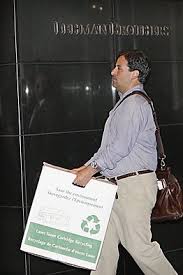
In all this, of course, the policy pursues and attempts to limit the damage. After the first failure, and especially after the crash of Lehman Brothers, the U.S. has been forced to leave the line free-speaking, at the expense of taxpayers, to interrupt the chain of failures.
Among the first to say a few words about what to do to avoid the recurrence of such situations, the economy minister Giulio Tremonti who, on the sidelines of the G20, called the banks to task, emphasizing that they "should not control the government" and adding that, having received large amounts of state funding, not could close the tap for small and medium-sized enterprises who need instead of cash for investment and innovation, only weapons against the crisis. Since then little else until it was President Obama to bring the matter to the attention of the media and public opinion.
The American president has proposed, in fact, new measures to limit the size and activities of banks, which can not invest more in hedge funds.
"American taxpayers should not be hostage to banks too big to fail". "My decision is only reinforced when I see you return to old practices in the companies that oppose the reforms, and when I see the growth in profits and obscene bonuses in some of the companies that claim to not be able to grant loans to small entrepreneurs," Obama said, referring to the bonuses paid this year to managers of large banks.
After ripping Obama were heard the voices of the Dragons, who as chairman of the Financial stabilty board declares:''The proposals announced yesterday by the United States fall within the range of options are being considered the FSB in its work to contain the risks posed by the institutions too big to fail''and German Chancellor Merkel who together with his Minister of Finance is preparing an international conference to establish new financial markets and accelerate the process of coordination before the next summit of G20 countries, held in June in Canada.
wait for the G20 to judge, trusting that the new U.S. course is really geared to the protection of depositors and taxpayers and not the more powerful banking lobby in Europe, America and the world.

Pasqualino Bookmarks